



Every time you swipe, tap, or insert your credit card at a store, something happens behind the scenes that most people never think about — your transaction gets tagged with a four-digit code that determines how it’s classified, taxed, and even how many rewards points you earn. That code is called a Merchant Category Code, or MCC, and understanding it could save your business money, keep you compliant, and help your customers get the most from their cards.
Table of Contents
What Is a Merchant Category Code (MCC)?
A Merchant Category Code (MCC) is a four-digit number assigned to a business by credit card networks — Visa, Mastercard, American Express, and Discover — to classify the type of goods or services it primarily sells. First introduced in the 1970s, MCCs were standardized by the International Organization for Standardization (ISO) under ISO 18245.
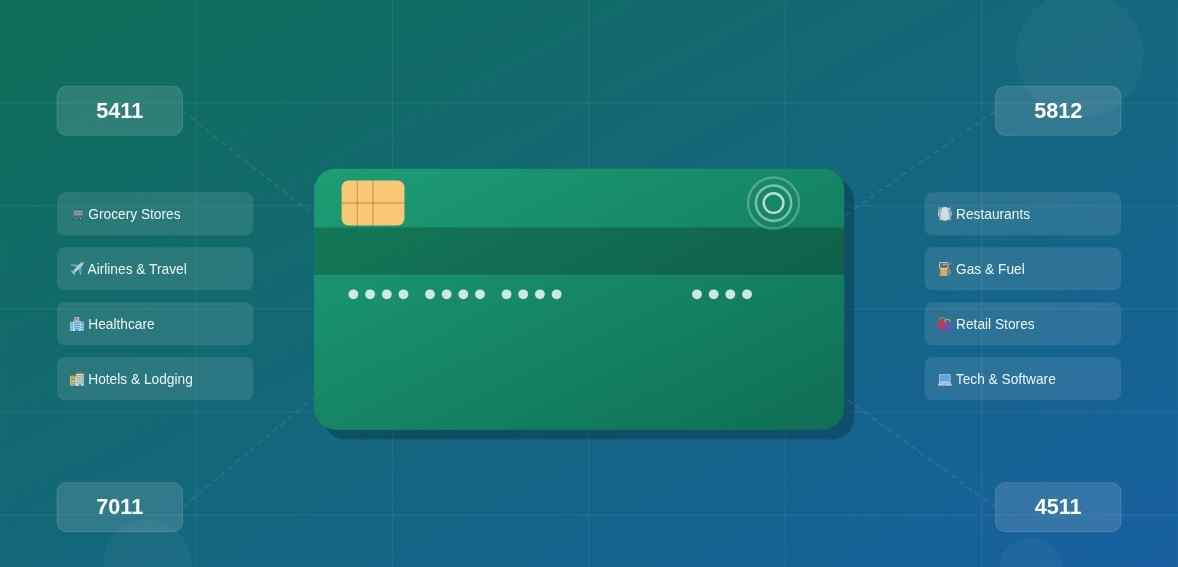
Every merchant that accepts credit or debit card payments is assigned at least one MCC. The code doesn’t describe a specific transaction — it describes the merchant’s primary business type. So a supermarket always carries MCC 5411 (Grocery Stores and Supermarkets), whether a customer is buying bread or batteries.
Think of MCCs as the DNA of your business identity in the payment ecosystem. They silently influence interchange fees, cardholder rewards, fraud detection algorithms, tax reporting, and even whether certain transactions are allowed at all.
A Brief History of Merchant Category Codes
MCCs were originally developed in the 1970s when Visa (then BankAmericard) needed a systematic way to classify merchants for billing and reporting purposes. Over the following decades, Mastercard, American Express, and Discover adopted similar — though not always identical — category systems.
In 2003, the ISO published ISO 18245, which standardized MCC definitions internationally, though card networks still retain the authority to define and assign codes within their own systems. Today, thousands of distinct MCCs exist, covering everything from antique dealers to zoos.
How Are Merchant Category Codes Assigned?
When a business applies to accept credit card payments, it works with an acquiring bank (also called a merchant acquirer). During the application process, the acquirer reviews the business’s products, services, and industry, then assigns the most appropriate MCC. The process typically works like this:
- The merchant submits an application to their payment processor or acquiring bank.
- The acquirer reviews the nature of the business and selects an MCC from the card network’s approved list.
- The card network (Visa, Mastercard, etc.) approves or adjusts the MCC.
- The MCC is embedded into the merchant’s terminal or payment gateway and transmitted with every transaction.
It’s worth noting that different card networks may assign slightly different MCCs to the same merchant, though most follow the ISO 18245 standard closely.
Complete List of Major Merchant Category Codes (MCC)
Below is a comprehensive table of the most important and widely used MCCs, organized by industry. There are over 600 distinct MCCs in total — this table covers the codes most relevant to US businesses and consumers.
| MCC Code | Category | Description | Common Merchants |
| ✈️ Airlines & Travel | |||
| 3000–3299 | Airlines (Specific) | Individual airline carrier codes | Delta, United, American Airlines |
| 4111 | Local/Suburban Transit | Commuter buses, subways, trains | MTA, BART, Chicago CTA |
| 4112 | Passenger Railways | Rail transportation services | Amtrak, commuter rail |
| 4411 | Cruise Lines | Passenger ship and cruise services | Royal Caribbean, Carnival |
| 4511 | Airlines, Air Carriers | General airline purchases | Various airlines |
| 4722 | Travel Agencies | Travel booking and tour operators | Expedia, travel agents |
| 4784 | Tolls and Bridge Fees | Road toll payments | E-ZPass, toll plazas |
| 4789 | Transportation Services | Miscellaneous transportation | Rideshares, limos |
| 🏨 Lodging & Hotels | |||
| 3501–3999 | Hotels (Specific Chains) | Individual hotel chain codes | Marriott, Hilton, Hyatt |
| 7011 | Hotels, Motels, Resorts | General lodging accommodations | Any hotel or motel |
| 7012 | Timeshares | Vacation ownership purchases | Wyndham, Marriott Vacations |
| 🍽️ Food & Restaurants | |||
| 5411 | Grocery Stores, Supermarkets | Full-service grocery retailers | Kroger, Whole Foods, Safeway |
| 5441 | Candy, Nut, Confectionery | Specialty candy and snack retailers | See’s Candies, candy shops |
| 5451 | Dairy Products Stores | Dairy-focused retail | Specialty dairy stores |
| 5462 | Bakeries | Retail bread and pastry shops | Local bakeries, Panera Bread |
| 5499 | Misc. Food Stores | Convenience stores, specialty food | 7-Eleven, food co-ops |
| 5811 | Caterers | Food catering services | Event caterers |
| 5812 | Eating Places, Restaurants | Full and limited service restaurants | McDonald’s, Olive Garden |
| 5813 | Bars, Cocktail Lounges | Drinking establishments | Bars, nightclubs, pubs |
| 5814 | Fast Food Restaurants | Quick service food establishments | Chick-fil-A, Subway, Taco Bell |
| 🛍️ Retail Stores | |||
| 5200 | Home Supply, Hardware | Building materials and hardware | Home Depot, Lowe’s |
| 5251 | Hardware Stores | Tools and hardware retail | True Value, local hardware |
| 5261 | Lawn & Garden Supply | Outdoor and garden retail | Nurseries, garden centers |
| 5300 | Wholesale Clubs | Membership-based bulk retail | Costco, Sam’s Club, BJ’s |
| 5310 | Discount Stores | General merchandise discounters | Dollar General, Family Dollar |
| 5311 | Department Stores | Multi-department general retail | Macy’s, Nordstrom, JCPenney |
| 5331 | Variety Stores | General variety merchandise | Dollar Tree, Five Below |
| 5399 | Misc. General Merchandise | Uncategorized general retail | Various general stores |
| 5511 | Car & Truck Dealers (New) | New automobile dealerships | Ford, Toyota, Honda dealers |
| 5521 | Car Dealers (Used) | Used vehicle sales | CarMax, local used car lots |
| 5541 | Gas Stations, Service Stations | Fuel and automotive services | Shell, BP, ExxonMobil |
| 5571 | Motorcycle Shops, Dealers | Motorcycle retail and service | Harley-Davidson dealers |
| 5600 | Apparel & Accessory Stores | Clothing and fashion retail | Gap, H&M, Zara |
| 5621 | Women’s Ready-to-Wear | Women’s clothing retail | Ann Taylor, WHBM |
| 5641 | Children’s and Infants’ Wear | Kids’ clothing and accessories | Carter’s, OshKosh, Gap Kids |
| 5651 | Family Clothing Stores | General family apparel | Old Navy, Target clothing |
| 5661 | Shoe Stores | Footwear retail | Foot Locker, DSW, Skechers |
| 5712 | Furniture, Home Furnishings | Home furniture and decor | IKEA, Ashley Furniture |
| 5732 | Electronics Stores | Consumer electronics retail | Best Buy, Apple Store |
| 5734 | Computer and Software Stores | Computers and software | Microsoft Store, computer shops |
| 5912 | Drug Stores, Pharmacies | Prescription and OTC medications | CVS, Walgreens, Rite Aid |
| 5941 | Sporting Goods, Hobby Stores | Athletic and recreational retail | Dick’s Sporting Goods, REI |
| 5942 | Bookstores | Book and publication retail | Barnes & Noble |
| 5945 | Hobby, Toy, and Game Shops | Toys, games, and hobby supplies | Target toys, hobby shops |
| 5947 | Gift, Card, Novelty Stores | Gift and greeting card shops | Hallmark, Spencer’s Gifts |
| 5999 | Miscellaneous Retail | Retail not elsewhere classified | Various specialty stores |
| 🏥 Healthcare | |||
| 5047 | Medical and Dental Equipment | Medical device and supply sales | Medical supply companies |
| 5122 | Drugs, Drug Proprietaries | Pharmaceutical wholesale | Drug wholesalers |
| 8011 | Doctors and Physicians | Medical office visits | Primary care, specialists |
| 8021 | Dentists, Orthodontists | Dental care services | Dental offices |
| 8041 | Chiropractors | Chiropractic care | Chiropractic clinics |
| 8049 | Podiatrists, Foot Specialists | Foot and ankle care | Podiatry offices |
| 8062 | Hospitals | Inpatient and emergency care | General hospitals |
| 8099 | Health and Medical Services | Misc. health services | Urgent care, labs, imaging |
| 💼 Professional Services | |||
| 7372 | Computer Programming, Data Processing | Software and IT services | SaaS companies, IT firms |
| 7392 | Management, Consulting, PR | Business consulting services | Consulting firms, PR agencies |
| 7399 | Business Services, NEC | Miscellaneous business services | Various B2B providers |
| 8111 | Legal Services, Attorneys | Legal and law firm services | Law firms, attorneys |
| 8931 | Accounting, Auditing, Bookkeeping | Financial reporting services | CPA firms, bookkeepers |
| 8999 | Professional Services, NEC | Other professional services | Consultants, advisors |
| 🎭 Entertainment & Recreation | |||
| 7832 | Motion Picture Theaters | Movie theaters and cinemas | AMC, Regal, Cinemark |
| 7922 | Theatrical Producers, Ticket Agencies | Live event ticketing | Ticketmaster, StubHub |
| 7996 | Amusement Parks, Carnivals | Theme parks and attractions | Disney, Six Flags |
| 7997 | Clubs, Country Clubs, Golf | Membership clubs and golf courses | Country clubs, golf courses |
| 7999 | Recreation Services, NEC | Miscellaneous recreation | Sports clubs, gyms, bowling |
| 🏦 Financial Services | |||
| 6010 | Financial Institutions — Manual Cash | Bank cash advances | Bank tellers |
| 6011 | Automated Cash Disbursements | ATM cash withdrawals | ATMs |
| 6051 | Non-Financial Institutions | Currency exchange, crypto | Currency exchanges, crypto platforms |
| 6211 | Security Brokers, Dealers | Investment and securities trading | Brokerages, investment firms |
| 6300 | Insurance Sales, Underwriting | Insurance products and services | Insurance agencies |
| 🏛️ Government & Utilities | |||
| 4814 | Telecommunication Services | Phone and internet services | AT&T, Verizon, Comcast |
| 4900 | Utilities — Electric, Gas, Water | Utility bill payments | Power companies, water utilities |
| 9222 | Fines — Government Agencies | Court fines and penalties | Courts, government agencies |
| 9311 | Tax Payments — Government Agencies | Tax and fee payments | IRS, state tax agencies |
Why Merchant Category Codes Matter
MCCs aren’t just bureaucratic labels. They have real, tangible effects on your business operations and your customers’ experience. Here’s a breakdown of the key areas MCCs influence:
1. Interchange Fees
Interchange fees are the transaction fees paid to the cardholder’s bank every time a card is used. These fees vary significantly by MCC. Merchants in lower-risk categories — like grocery stores (MCC 5411) — often receive preferential interchange rates. High-risk categories like gambling (MCC 7995) or cryptocurrency (MCC 6051) pay significantly higher rates. For a high-volume business, even a 0.1% difference in interchange rates can translate into thousands of dollars per month. Your MCC directly impacts your bottom line.
2. Credit Card Rewards and Cashback
When your credit card gives you 3x points at ‘restaurants,’ it’s using the MCC to determine what qualifies. If a merchant is miscategorized — say, a food truck classified under MCC 5999 (Miscellaneous Retail) instead of MCC 5812 (Restaurants) — cardholders won’t earn their bonus rewards there. Savvy reward card users sometimes check merchant MCCs to ensure they’re getting the bonus category multipliers they expect.
3. Fraud Detection and Risk Management
Card networks and issuing banks use MCCs as one input in their fraud detection algorithms. Unusual transactions at high-risk MCCs — such as wire transfers (MCC 4829), precious metals dealers (MCC 5094), or pawn shops (MCC 5933) — may trigger additional scrutiny or holds. Banks also use MCCs to enforce spending controls on corporate cards, blocking certain categories outright.
4. Tax Reporting and IRS Compliance
The IRS uses MCCs to classify business expenses. Form 1099-K reporting thresholds and requirements can differ based on merchant type. Certain MCCs trigger automatic reporting regardless of transaction amount. For business owners, accurate MCC classification ensures your payment records align properly with your accounting categories and tax filings.
5. Corporate Card Spending Controls
Many companies issue corporate credit cards with MCC-based restrictions — allowing restaurants (MCC 5812) and gas stations (MCC 5541) but blocking bars (MCC 5813) or gambling (MCC 7995). This is how expense management platforms enforce spending policies automatically, without requiring manual review of every receipt.
6. Chargeback Rules and Policies
Chargeback rules and time limits can vary by MCC. Some industries — like travel and ticketing — have different chargeback windows because of the gap between purchase and service delivery. Understanding your MCC helps you know what dispute rules apply to your transactions.
High-Risk MCCs — What They Mean for Your Business
Certain MCCs are flagged as ‘high-risk’ by acquiring banks and card networks. Businesses assigned these codes often face higher processing fees, stricter underwriting, rolling reserves, and difficulty finding a willing payment processor. Common high-risk MCCs include:
- 5967 — Direct Marketing: Inbound Teleservices
- 7273 — Dating and Escort Services
- 7995 — Gambling Transactions
- 6051 — Non-Financial Institutions (crypto, money orders)
- 4829 — Wire Transfer, Money Orders
- 5999 — Miscellaneous Retail (often used as a catch-all)
If your business falls into a high-risk MCC, work with a specialized high-risk merchant account provider. Attempting to hide in a lower-risk MCC — known as ‘miscoding’ — is a serious violation of card network rules and can result in account termination and heavy fines.
How to Find Your Merchant Category Code
- Ask your payment processor or acquiring bank — the most direct route.
- Review your merchant account agreement — many include the MCC in setup documentation.
- Use a Visa or Mastercard MCC lookup tool — both networks maintain searchable online resources.
- Check your processing statements — some detailed statements list the MCC in the account information section.
Can You Change Your Merchant Category Code?
Yes, but it requires working through your acquiring bank or payment processor. If you believe your business has been incorrectly categorized, here is the process:
- Contact your payment processor and request an MCC review.
- Provide documentation of your primary products and services (website, business license, product catalog).
- The processor submits a reclassification request to the card network.
- The card network reviews and approves or denies the change.
Keep in mind that processors have little incentive to reclassify you to a lower interchange rate, so you may need to be persistent. If you’re launching a new service line that significantly changes your business type, proactively requesting an MCC update is a smart move.
MCCs and Digital Commerce
E-commerce and digital-first businesses have introduced new complexity into the MCC world. A single platform might sell physical goods, digital downloads, software subscriptions, and professional services — all of which could fall under different MCCs. Processors typically assign the MCC that best represents the merchant’s primary revenue source.
Digital services companies often land in MCC 7372 (Computer Programming and Data Processing) or MCC 5734 (Computer and Software Stores). Cryptocurrency exchanges are now commonly classified under MCC 6051. As the digital economy evolves, card networks periodically introduce new MCCs to cover emerging business models.
Frequently Asked Questions About MCCs
Can one business have multiple MCCs?
A single merchant account can only have one MCC at a time. However, a business with multiple locations or distinct business lines may set up separate merchant accounts, each with a different MCC. Large retailers like Walmart may even negotiate custom arrangements with card networks.
Do MCCs affect my credit score?
No. MCCs classify merchants, not consumers. They have no direct effect on your personal credit score, though they do affect how your purchases are categorized on your credit card statement.
Why did I not earn bonus rewards at a merchant I expected to?
This is almost always an MCC mismatch. Grocery departments inside Target or Walmart are often coded as general merchandise (MCC 5311) rather than grocery (MCC 5411), so grocery rewards cards don’t give bonus points there. Checking the MCC before assuming you’ll earn a bonus is always wise.
Are MCCs the same across all card networks?
Mostly, but not entirely. Visa, Mastercard, American Express, and Discover all follow ISO 18245 as a baseline, but each network has its own nuances. These differences are usually minor but can affect rewards and fees.
What happens if a merchant has the wrong MCC?
An incorrect MCC can result in higher interchange fees, customers missing rewards, compliance issues, and — if miscoding appears intentional — penalties from card networks. It’s always in a merchant’s best interest to ensure accurate classification.
How often do card networks update MCC lists?
Card networks periodically update their MCC lists to reflect new industries and business models. Visa and Mastercard announce updates through bulletins to acquiring banks. Merchants are not always directly notified, which is another reason to stay in regular contact with your payment processor.
The Bottom Line
Merchant Category Codes are one of the most influential — and most overlooked — elements of the payment processing ecosystem. Whether you’re a business owner minimizing interchange fees, a consumer maximizing credit card rewards, or a finance professional managing corporate card spending, understanding MCCs gives you a meaningful edge.
If you’re unsure about your business’s MCC or suspect you may be misclassified, the best first step is a conversation with your payment processor. A single call could save your business real money every month.
At Merchant Services Info, we help businesses navigate every aspect of payment processing — from MCC classification to interchange optimization to finding the right processor for your industry. Contact us today to learn how we can help your business get the best possible setup for accepting card payments.